
Introduction
Extremozymes, enzymes isolated from extremophilic microorganisms adapted to hostile environments (high/low temperature, extreme pH, high salinity, or pressure), are fundamentally transforming industrial biotechnology. Unlike mesophilic counterparts, these biocatalysts retain structural integrity, catalytic efficiency, and substrate specificity under conditions that would denature conventional enzymes. Their inherent robustness enables biocatalysis in harsh physicochemical regimes, rendering them indispensable for biofuel production, fine-chemical synthesis, pharmaceutical manufacturing, food processing, and environmental remediation.
In an era of heightened focus on sustainable manufacturing and green chemistry, extremozymes provide a compelling alternative to traditional chemical catalysts. They operate under milder conditions, significantly reduce energy inputs and hazardous waste generation, and support atom-efficient, selective transformations. This review synthesizes current knowledge on the discovery, molecular characteristics, industrial applications, and future prospects of extremozymes, underscoring their pivotal role in advancing sustainable bioprocesses.

Discovery of Extremozymes Extremozymes
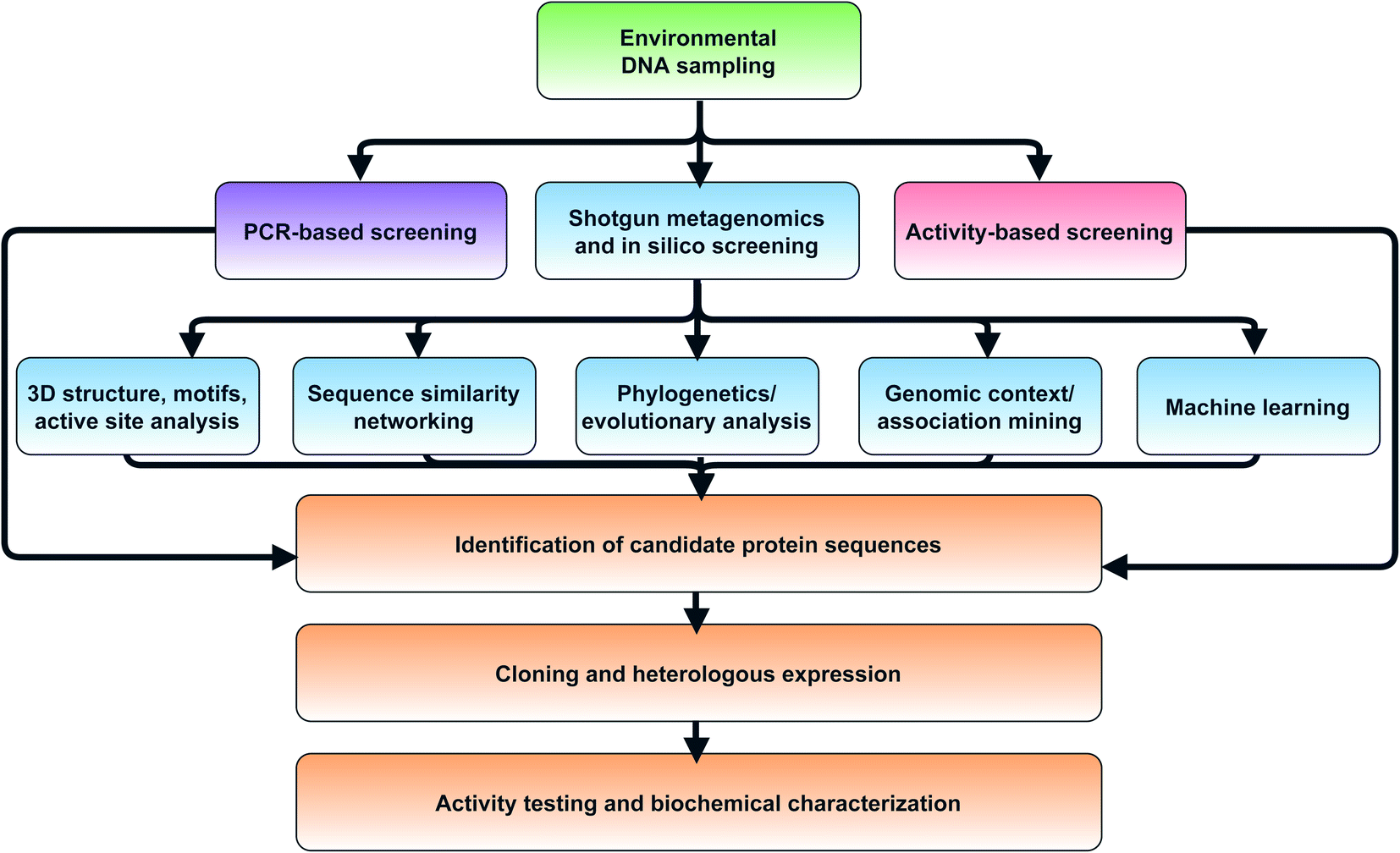
are typically sourced from geothermal springs, deep-sea hydrothermal vents, hypersaline lakes, acidic mine drainage, and alkaline soils. Conventional cultivation-based approaches recover <1 % of microbial diversity, severely constraining access to novel catalysts. Culture-independent metagenomic strategies circumvent this limitation by direct extraction of environmental DNA (eDNA), high-throughput sequencing, and bioinformatic mining of genes encoding extremozymes.
Characteristics of Extremozymes for Industrial Use
Extremozymes exhibit four cardinal features that underpin their industrial utility:
- Thermal stability: Retention of activity at 60–120 °C (thermophiles/hyperthermophiles) enables elevated reaction rates, reduced viscosity, and minimized microbial contamination. Stability arises from increased ionic interactions (salt bridges), disulfide bonds, compact hydrophobic cores, and reduced entropic unfolding penalties.
- pH and solvent tolerance: Acidophilic, alkaliphilic, and halophilic variants function across pH 0–12 or in high-salt/organic-solvent media, expanding the reaction space for processes incompatible with standard enzymes.
- Structural robustness: Enhanced secondary/tertiary structure rigidity confers resistance to denaturation, proteolysis, and shear forces encountered in bioreactors.
- Substrate specificity and catalytic efficiency: Broad or novel specificities, coupled with high k_cat/K_M values under extreme conditions, facilitate challenging transformations such as enantioselective synthesis or lignocellulose depolymerization.
Collectively, these traits support continuous, high-throughput, and energy-efficient bioprocesses across sectors.
Applications in Industrial Biocatalysis
Biofuel Production
Thermostable cellulases, hemicellulases, and amylases from thermophilic and hyperthermophilic sources enable simultaneous saccharification and fermentation (SSF) of lignocellulosic biomass at 50–80 °C. Elevated temperatures accelerate hydrolysis kinetics, reduce contamination risk, and improve sugar yields while lowering energy demands for cooling. These enzymes are central to second-generation bioethanol and advanced biofuel platforms.

Pharmaceutical Manufacturing
Extremozymes play a critical role in pharmaceutical manufacturing, catalyzing stereoselective transformations that are essential for producing chiral active pharmaceutical ingredients (APIs). Enzymes such as lipases, esterases, and ketoreductases operate efficiently in organic solvents or at elevated temperatures, achieving high enantiomeric excess (>99% ee) while maintaining stability under harsh process conditions. Beyond synthesis, extremozymes are also applied in diagnostic kits and formulation stabilizers, extending shelf-life and ensuring consistent performance under non-refrigerated storage conditions, making them indispensable for modern pharmaceutical workflows.
Food and Beverage Industry
In the food and beverage industry, heat-stable extremozymes, including α-amylases, glucoamylases, proteases, and lipases, enhance process efficiency and product quality. They facilitate starch liquefaction, saccharification, milk coagulation, and flavor development across baking, brewing, dairy, and meat processing. The intrinsic thermostability of these enzymes allows them to remain active during pasteurization or high-temperature extrusion, preserving nutritional value, sensory properties, and food safety, while streamlining production and reducing processing times.
Chemical Synthesis and Specialty Chemicals
Extremozymes provide sustainable alternatives to toxic metal catalysts in chemical synthesis, enabling enantioselective esterifications, transesterifications, and oxidation reactions under organic solvent conditions or high-pressure regimes. By maintaining activity in challenging environments, these enzymes facilitate solvent-tolerant, atom-economical, and environmentally friendly routes to fine chemicals, polymers, and pharmaceutical intermediates, fully aligning with the 12 principles of green chemistry. Their high specificity reduces by-products and minimizes the use of hazardous reagents, supporting eco-conscious industrial production.
Environmental and Sustainability Impacts
Extremozymes contribute significantly to environmental sustainability. Their ability to catalyze reactions at process-optimal temperatures reduces energy consumption by eliminating the need for additional heating or cooling cycles. High substrate specificity minimizes side-product formation and hazardous waste, while their robustness allows applications in bioremediation, including halo-tolerant enzymes for saline wastewater, enzymatic pretreatment of lignocellulosic biomass, and eco-friendly detergents. Collectively, these applications support circular bioeconomy models, promoting sustainable industrial and environmental practices.
Future Directions
The advancement of extremozyme technology relies on four synergistic pillars. First, protein engineering and directed evolution leverage both rational design (e.g., site-directed mutagenesis, B-factor analysis) and random mutagenesis libraries coupled with high-throughput screening, producing enzyme variants with enhanced thermostability, solvent tolerance, and catalytic efficiency. Second, metagenomic mining continues to uncover novel extremozymes from previously inaccessible environments. Third, synthetic biology integration enables optimized microbial hosts for large-scale production. Finally, hybrid biocatalytic systems combine extremozymes with chemical catalysts to maximize efficiency and sustainability in complex industrial reactions. Together, these approaches promise to expand the scope, efficiency, and eco-friendliness of industrial biocatalysis, positioning extremozymes at the forefront of green biotechnology.

• Synthetic biology integration: Construction of optimized chassis strains and cell-free systems for high-level production and in vivo pathway assembly.
• Metagenomic and culturomics expansion: Exploration of under-sampled extreme niches, augmented by AI-driven sequence mining and culturomics, to uncover novel catalytic scaffolds.
• Hybrid biocatalytic–chemical systems: Multi-enzyme cascades or chemo-enzymatic cascades for complex multi-step syntheses.
These innovations, combined with process intensification and scale-up strategies, will broaden the industrial footprint of extremozymes.
Conclusion
Extremozymes have matured from scientific curiosities into cornerstone biocatalysts of sustainable industrial biotechnology. Their unparalleled thermal, pH, and solvent stability, coupled with exquisite specificity, underpin high-efficiency, low-waste processes across biofuels, pharmaceuticals, food, chemicals, and environmental sectors. Continued progress in metagenomics, protein engineering, and synthetic biology will unlock further functional diversity and performance gains, positioning extremozymes as key enablers of the global transition to green manufacturing.